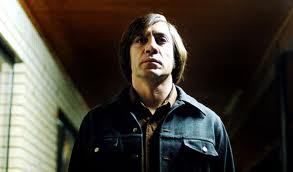
American exceptionalism, in a nutshell


Bad guys are everywhere, friend-o.

Bad guys are everywhere, friend-o.

Spokespersons for the U.S. military often refer to anti-American combatants as “bad guys,” as if opposition to U.S. foreign policy is the same as immorality. As if killing on behalf of the U.S. government makes you exempt from bad-guy status.

Newsflash: Bad guys are everywhere. Chechen bad guys have killed Russian noncombatants in efforts to win independence for Chechnya. Russian bad guys have killed Chechen noncombatants in efforts to keep the region under Russian control. American bad guys are killing noncombatants throughout the Middle East to protect the interests of Big Oil.

One might argue that American bad guys are exceptionally bad because they insist on portraying themselves as good, no matter how many noncombatants they kill. These are the same Americans who insist that slaughtering Indians, nuking Japan and dropping napalm on the Vietnamese were all for the good.

It’s a big old goofy world, as John Prine sang, and there is nothing goofier than the notion that one nation is morally superior to another. That’s the message of every preacher or politician who denounces terrorist attacks on America while condoning American terrorism abroad; of everyone from the obviously bad Dick Cheney to the not-so-obviously bad Barack Obama, who speaks out against bombers in Boston even as he green-lights drone bombings that kill noncombatants on the other side of the world.

Footnote: Has anyone else had their fill of so-called news stories about the Boston Marathon bombings? Of ghouls with cameras who stalk those who knew the victims? (Reporter to relative of bombing victim: How does it feel to be the relative of a bombing victim?) Nothing is revealed in these creepy encounters, other than the fact that some people think journalism and voyeurism are the same thing.

Posted in Iraq war, life in the big city, mainstream media, Obama, terrorism | Tagged , , , , , | 2 Comments

NY Times to Denmark: Work harder, for less


From a weirdly negative front-page story about Denmark in the Sunday New York Times.

In 2012, a little over 2.6 million people between the ages of 15 and 64 were working in Denmark, 47 percent of the total population and 73 percent of the 15- to 64-year-olds.

While only about 65 percent of working age adults are employed in the United States, comparisons are misleading, since many Danes work short hours and all enjoy perks like long vacations and lengthy paid maternity leaves, not to speak of a de facto minimum wage approaching $20 an hour. Danes would rank much lower in terms of hours worked per year.

The economist Dean Baker and other readers are still scratching their heads. Why does The Times find something ominous in the fact that Danes work fewer hours per year than Americans but enjoy a stabler economy, a higher employment rate and better quality of life in most measurable categories? Is The Times spooked by Denmark’s higher tax rates? By the very idea of a system that isn’t rigged to impoverish the working class?

Posted in Great Recession, humor, mainstream media, unemployment | Tagged , , , , , | 2 Comments

Ding dong! Maggie’s dirty deeds live on


From a 2004 column in Daily Mail on what happened to the working class in Britain after Margaret Thatcher’s successful crusade to kill the miners’ union:

… What the [coal miners’] strike represented to us was a set of values worth fighting for. It was never simply about pay. It was about the threat Thatcher’s free-market philosophy meant to their way of life, to their communities, to the very idea of trade unions.

Looking back, the Right wing Press cleverly presented Thatcher’s ideology as the inevitable future – an economy based on privatisation and deregulation.

This meant closing the pits, so the miners were represented as fighting for the past. Nobody much mentioned that this past included a time when a working man’s dignity, self-sacrifice and solidarity were considered virtues.
But look who was right and who was wrong.

The future that Thatcher fought for has arrived in the pit villages where the mines are shut down. It is the future of drug addiction, social deprivation and part-time, temporary, non-unionised jobs.

Thatcher worked like a pearl-bedecked fanatic to transform the Britain of Clement Attlee into a lean, mean corporate machine — a middleweight version of what the USA has become. It’s almost as if her policies were conceived to flatter Ronald Reagan, the union-busting blowhard who was her ideological paramour. Too bad the two of them didn’t run off together in the early 1980s and buy a million-acre plantation, or a dude ranch, instead of wrecking millions of lives.

Footnote: Polly Toynbee of Guardian tried to write nice things about the Iron Witch, mostly by favorably comparing her to David Cameron. But near the end of Toynbee’s column was this:

When [Thatcher] walked into Downing Street promising harmony instead of discord, only one in seven children was poor and Britain was more equal than at any time in modern history. But within a few years, a third of children were poor, a sign of the yawning inequality from which the country never recovered.

One more: I’ll bet E.P. “Yip” Harburg, who wrote the lyrics for The Wizard of Oz movie (1939), would have loved that Thatcher’s death breathed new life into “Ding Dong the Witch Is Dead.” which almost reached the top of the pops this week in Britain. As Ed Lamb recently noted, Harburg was a lifelong leftist who also co-wrote “Brother, Can You Spare a Dime,” an anthem from the Depression that preceded the one we’re in now.

Posted in economic collapse, history, humor, mainstream media, pop music, The New Depression, unemployment, world-wide economy | Tagged , , , , | 3 Comments

When life feels like ‘Groundhog Day’


I was biking through a school-free drug zone, on my way to a temp job, cultivating bad habits. Not overtly bad habits — Marlboros and meth, and so on — but rather those drab little habits meant to ensure the absence of surprise and disorder from one’s life. God forbid I should fail to eat my oatmeal before 8 a.m. or choose a different route to that glass-and-steel tower in Center City. Surely there’s a bus waiting to crush me if I don’t use 18th Street or don’t ride past the rodent that’s been rotting on Fitzwater Street for two weeks.

I’m thinking of the rodent in Groundhog Day, in which Bill Murray plays a TV weatherman mad at the world because he’s trapped in what feels like a soul-killing routine. The gods punish him by literally making him live the same day over and over until he learns to enjoy what he has and treat people better.

The Murray character sinks into depression as he wakes each day to the cloying refrain of “I Got You, Babe” on his clock-radio. For a while his dread of sameness commingles with gratitude for it. He begins to mistakenly believe that the sameness, the repetition, is an opportunity to fix his life without taking risks. But that doesn’t work either, so he kills himself, only to wake up again to “I Got You, Babe.”

I wake to NPR and the hope that neurotic rituals will help me feel better, or at least no worse than I’ve felt since New Year’s, when the tree in my backyard snapped in the wind and crashed into my house, capping what was for me a really bad year. But that’s another story, one that feels too tritely symbolic to make into a good movie, or even a good blog post.

Footnote: Check out the late Roger Ebert’s review of Groundhog Day — a re-review, actually — for a good example of his insightful style.

Another: I had that “This is like Groundhog Day” feeling ten years ago while the mainstream media, day after day, backed Bush’s call for war in Iraq, just as it had backed the equally disastrous war in Vietnam.

One more: Listen to “I Got You, Babe” and try to get the insipid melody out of your head. I dare you.

Posted in economic collapse, humor, Iraq war, life in the big city, mainstream media, movies, Philadelphia, pop music | Tagged , , , , , , , | Leave a comment

Easter story, updated


And they said among themselves, Who shall roll us away the stone from the door of the sepulcher? — Mark 16:3

My friend Jesus the taqueria owner was whacked on Friday by demented jerks with nail guns. It wasn’t pretty. I went to the viewing this morning with all his other friends, hoping it would be a closed-casket affair. Lo and behold, somebody had stolen his body! A bunch of cultists, I’ll bet. Probably the same guys who whacked him. I hope they aren’t planning any further mischief.

Posted in fiction, history, humor | Tagged , , , | Leave a comment

‘The Next Day’ a surprise gift to Bowie fans


On with the show, duckies.

On with the show, duckies.

David Bowie’s low visibility in recent years led to rumors he might be dying, or simply too bored to record again. At some point, he got over his ennui, if that’s what it was, and began working on The Next Day, his first album in a decade and easily one of the best high-profile pop records of late, no offense to Mumford & Sons, the Lumineers, and the other middle-of-the-road regulars on “alternative” radio.

The Next Day isn’t so much about Bowie making a comeback as coming to terms with mortality, a subject he explored decades ago through Ziggy Stardust, Aladdin Sane and his other exotic self-inventions. He’s working the same territory again but without the masks, which would look pretty silly on a 66-year-old heart attack survivor. In spirit, the new album is reminiscent of Time Out of Mind (1997), the great record Bob Dylan made when it seemed he was all used up.

Most of Bowie’s new songs are sardonic, harshly melodic reminders of his enduring impact on mainstream culture. (Someone should write a book about the cognitive dissonance of all those homophobic, blue-collar corner boys who fell under Bowie’s spell back in the days when music critics were introducing the word “androgynous” to Middle America.)

The dark but jaunty title song sets the tone — Here I am/Not quite dying/My body left to rot in a hollow tree. “Dirty Boys,” with its rude bass sax and brittle guitar, is a mock-sinister salute to predatory misfits. “The Stars (Are Out Tonight)” imagines pop stars as otherworldly creatures who take a hostile, voyeuristic interest in normal people. (In the video, the stars stalk Bowie and Tilda Swinton, playing a normal couple in a supermarket.)

None of Bowie’s conceits would matter if he didn’t have a gift for transforming self-obsession into wildly theatrical material that rings true on an emotional level — old songs like “Heroes” and new ones like “I’d Rather Be High,” which has a martial beat and a beautifully transcendent chorus sung from the point of view of a reluctant young soldier: I’d rather be high/I’d rather be flying/I’d rather be dead/Or out of my head/Than training these guns on those men in the sand/I’d rather be high.

The latter song has been playing in my head for more than a week, since I landed a temp job in a corporate setting where I have to fake being normal, not that I’m fooling anyone.

The Next Day includes 13 other new tracks, but you get the idea. A few are less than stellar, but the album as a whole is, yes, better than anything Bowie has done since Scary Monsters (1980). Even some of my fellow geezers might like it.

Footnote: Speaking of supermarkets, I was in the local Super Fresh last weekend reaching for a can of frijoles negros when “Subterranean Homesick Blues” came on the store radio. Don’t steal, don’t lift/Twenty years of schoolin’/And they put you on the day shift. I can think of only a few songwriters whose ironies resonate more deeply with each passing year. Dylan is one, and Bowie is another.

One more: Buy Bowie’s Heathen (2002), too, if you missed it. It’s a good one that got lost in the shuffle.

Posted in arts, humor, mainstream media, pop music, unemployment | Tagged , , , , , , , | 1 Comment

Cruising mean streets in the popemobile


The mainstream media love big, easy stories — natural disasters, inaugurations, papal elections. The election by the College of Cardinals of Jorge Bergoglio was a softball lobbed right over the plate, and the media knocked it out of the park.

Much was made of the fact that Bergoglio took the name Francis, after St. Francis of Assisi, a choice that’s humble or grandiose, depending on your point of view. I couldn’t help but think of Harvey Keitel, in Mean Streets, as the would-be mafioso who secretly aspires to the saintliness of Francis. Which is not to say there’s anything criminal about Pope Francis I; it’s just that he’s a long way from being a saint.

AP reported that Bergoglio, when he was archbishop of Buenos Aires, “often rode the bus to work, cooked his own meals and regularly visited the slums that ring Argentina’s capital. He considers social outreach, rather than doctrinal battles, to be the essential business of the church.” But the new pope is also a shrewd and personable company man who, as Robert Parry wrote, knew when to speak up for the poor and oppressed, and when to keep his mouth shut:

…Much as Pope Pius XII didn’t directly challenge the Nazis during the Holocaust, Father Bergoglio avoided any direct confrontation with the neo-Nazis who were terrorizing Argentina. Pope Francis’s defenders today, like apologists for Pope Pius, claim he did intervene quietly to save some individuals.

But no one asserts that Bergoglio stood up publicly against the “anticommunist” terror, as some other Church leaders did in Latin America, most notably El Salvador’s Archbishop Oscar Romero who then became a victim of right-wing assassins in 1980.

Indeed, the predominant role of the Church hierarchy – from the Vatican to the bishops in the individual countries – was to give political cover to the slaughter and to offer little protection to the priests and nuns who advocated “liberation theology,” i.e. the belief that Jesus did not just favor charity to the poor but wanted a just society that shared wealth and power with the poor…

Church leaders would have us believe that liberation theology inevitably leads to the sort of leftist regime depicted in Graham Greene’s The Power and the Glory, whose protagonist is a deeply flawed priest in Mexico, circa 1935, struggling to maintain his faith while running from a government-sanctioned death squad.

In one scene, set in a barn, the priest tries to finish saying Mass in time to escape the killer cops. Greene describes the priest as he sees his fear reflected in the eyes of the faithful:

Heaven must contain such scared and dutiful and hunger-lined faces. For a matter of seconds he felt an immense satisfaction that he could talk of suffering to them now without hypocrisy — it is hard for the sleek and well-fed priest to praise poverty.

Greene’s priest seems to have more in common with the leftist Romero than with Bergoglio, who “visited the slums” but wouldn’t be where he is today if he hadn’t played ball with right-wingers who killed advocates of the poor and oppressed.

The question now is whether Bergoglio, as the boss of bosses, will actively fight for slum dwellers or merely praise their poverty as he cruises past them in the popemobile. He’d be a lot more interesting if he tried to walk the walk, or at least revealed himself to be a man in conflict with himself, openly struggling with his flaws, like Greene’s priest or Keitel’s mobster.

Food for thought: If the pope had an iPod, would he download the Chips’ “Rubber Biscuit”?

Posted in fiction, mainstream media, movies | Tagged , , , , , , , , , , | 2 Comments

Are perfect storms the wave of the future?


The Day After Tomorrow (2004) has a cheesy script, but the spectacle of New York City immersed except for the upper floors of its tallest buildings is worth the DVD rental fee and doesn’t seem silly in our post-Hurricane Sandy world. In one scene, survivors of a climate-change catastrophe huddle in the New York Public Library, burning books in a big fireplace to keep from freezing.

In the real world, scientists are saying climate change almost certainly enhanced the impact of Sandy. This is from Cornell and Rutgers researchers:

So while [Sandy] does appear to have been the perfect storm, we can, unfortunately, expect many more as we move toward ice-free Arctic conditions in the coming years (see “Experts Warn ‘Near Ice-Free Arctic In Summer’ In A Decade If Volume Trends Continue”).

Polar bears might not be the only creatures who’ll have nothing left to stand on. It’ll be like that old song — “Row Your Boat Down Broadway,” I think it was called.

Posted in climate change, environmentalism, humor, life in the big city | Tagged , , , , | Leave a comment

Shoeshine boys debate job creation


[The job creators] have no intention of creating jobs now or in the future. They don’t have to create jobs and there’s nobody out there to make them do it. They simply will reduce the number of jobs they have now and grind the remaining employees, most of whom have no recourse any more, either to the government or to organized labor. The job creators thereupon will get rich not creating jobs, and they will continue to get rich not creating jobs, because creating jobs costs them money. Any politician who says anything else is lying to you.
Charles Pierce, in Esquire

Did I tell you about getting my shoes shined while working at the Curtis Center? A stocky guy, about 50, sneaked up with a battered shoeshine kit as I was sitting on a bench in Washington Square, eating my lunch and watching Colonial ghosts roll dice on the slate walkway. (Ghosts are everywhere if you’re in a ghostly frame of mind.)

The big guy asked for money and I gave him a bunch of change to get rid of him. The next thing I knew he was kneeling and smearing gunk on my shoes and rubbing it in with a brush.

— Whoa, don’t do that.

But he kept adding gunk and buffing and telling me my shoes were special, they needed special polish. He finished and I got up to go because he wouldn’t leave, and he started dissing me.

— You give me two bits for that shine. That ain’t shit.
— That was two bucks, not two bits. I didn’t even want a shoeshine. Who gets a shoeshine these days?

He told me he was trying to make a living, I could do better than two bits. He flashed a weary grin. I got in his face and pointed at the Curtis Center.

— You think I’ve got money because I’m dressed up? I’ve got a five-day job over there and that’s it, I’m as broke as you. The big corporations are screwing everybody. No unions, no long-term contracts, no benefits. They bleed you dry and blame you when there’s no more blood. It’s a new world, dude, open your eyes.
— It ain’t my world. I don’t know what you’re talking about.

I decided to not give him more money until he acknowledged it’s a new world and we’re all screwed. I told him the company I was temping for was hugely profitable even though it made drugs with so many side effects you have to use five-point type to fit them on the same page.

But all I got was that smile — that ancient stupid stoicism that has kept the poor down forever — and the feeling that I was the jerk. So I gave the man five more dollars and slouched back to the Curtis Center, where I did my dirty job and didn’t make a peep.

Posted in economic collapse, Great Compression, life in the big city, mainstream media, Philadelphia, The New Depression, unemployment | Tagged , , | Leave a comment

Being white in Philly Mag


[Update: I walked into a South Philly CVS and saw that headline again, screaming at me in bold white caps, and I thought oh no, race war, end of the world!]

It’s hard to read Philadelphia Magazine‘s March cover piece, “Being White in Philly,” by Robert Huber, as anything more than an exercise in cynicism. Huber had to know that his confused personal impressions regarding race relations didn’t add up to an actual story. And his editor surely saw that the piece was ill-conceived and unresolved, more likely to stir up resentment than encourage dialogue between black and white city residents.

Maybe you’re reading this and thinking OK, Philly Mag has been publishing variations on the same racist theme for decades, so why bother commenting on it? I guess because the article seems so disingenuous. Huber affects the “why can’t we all get along” tone of a white Rodney King, but with little bombs of condescension that could only have been meant to provoke:

whites

But like many people, I yearn for much more: that I could feel the freedom to speak to my African-American neighbors about, say, not only my concerns for my son’s safety living around Temple, but how the inner city needs to get its act together.

Substituting “inner city” makes Huber’s generalization seem even more insulting than it would have if he’d used “blacks.” His professed yearning to speak to his black neighbors reminds us that he didn’t quote, and perhaps didn’t even speak with, any black Philadelphians while doing his research, if you can call it that.

The article will piss off blacks while appealing to the magazine’s core demographic — reasonably well-off and well-educated whites who respond to ads for luxury cars and liposuction. Huber and Philly Mag are saying it’s OK for these whites to think of themselves as tolerant despite their fear and loathing of blacks; that it’s only natural to feel this way about people who, after all these years, still can’t get their act together.

Huber was writing more about class than race, but acknowledging this fact would have called attention to the superficiality of his analysis. He offers a brief history of white flight from Philly, but mentions none of the underlying socioeconomic factors — red-lining, gentrification, wage stagnation, de-industrialization, etc. — that have widened the gulf not only between whites and blacks but also between the well-off and poor of both races.

I was there, growing up in a Philly neighborhood that was transitioning from white to black in the 1960s-1970s, running with other white kids who were engaged in an ongoing street war with black kids. All the shootings and stabbings were manifestations of forces that all of us, black and white, couldn’t control or even understand.

Articles like “Being White In Philly” do nothing to shed light on why these forces persist. But such articles do boost print sales and online traffic, and that’s the bottom line.

Footnote: I like this from Stephen Marche, in 2011:

More than anything else, class now determines Americans’ fates. The old inequalities — racism, sexism, homophobia — are increasingly antiquated. Women are threatening to overwhelm men in the workplace, and the utter collapse of the black lower middle class in the age of Obama — a catastrophe for the African-American community — has little to do with prejudice and everything to do with brute economics. Who wins and who loses has become simplified, purified: those who own and those who don’t.

Posted in history, life in the big city, mainstream media, Philadelphia | Tagged , , , , | Leave a comment