‘Job creator’ myth debunked


NYT reporters don’t seem to have access to the same facts as NYT columnist Paul Krugman, maybe because he doesn’t have an intranet connection to the newsroom. I’m kidding, but who knows? On Friday, Krugman lit into Indiana Gov. Mitch Daniels for misleadingly referring to Steve Jobs, the late CEO of Apple, as a job creator, even though Apple employs only 43,000 people in the U.S. while indirectly employing 700,000 people in other countries.

Yes, the Times did report those figures in a piece that helped explain why Apple does so much work in totalitarian China — the Chinese government subsidizes huge manufacturing centers with reliable supply chains and ultra-cheap labor — and so little in the U.S.

However, a more thorough investigative piece would have put Chinese manufacturing efficiency in perspective by including the sometimes startling information in Krugman’s Friday column:

Germany remains a highly successful exporter even with workers who cost, on average, $44 an hour — much more than the average cost of American workers. And this success has a lot to do with the support its small and medium-sized companies — the famed Mittelstand — provide to each other via shared suppliers and the maintenance of a skilled work force.

The point is that successful companies — or, at any rate, companies that make a large contribution to a nation’s economy — don’t exist in isolation. Prosperity depends on the synergy between companies, on the cluster, not the individual entrepreneur.

But the current Republican worldview has no room for such considerations. From the G.O.P.’s perspective, it’s all about the heroic entrepreneur, the John Galt, I mean Steve Jobs-type “job creator” who showers benefits on the rest of us and who must, of course, be rewarded with tax rates lower than those paid by many middle-class workers…

I think Krugman’s larger, implicit point is that American corporations do what they do — off-shore millions of jobs while being treated to gigantic tax breaks — only because our corrupt political system allows them to do so. We could be Germany, a democracy with strong unions, good wages and universal health care, if we had laws that reined in the Ayn Rand disciples who sell out American workers but are portrayed as heroes by the American media.
Posted in campaign finance reform, economic collapse, globalization, Great Recession, mainstream media, New York Times, The New Depression, unemployment | Tagged , , , , , | 5 Comments

Newt promises the moon


Newt Gingrich was in Florida the other day, speaking of plans to build a colony on the moon.

This is funny, but cruel. Florida’s economy collapsed when the housing bubble burst. There will be no more housing booms in Florida, and only a looney would believe there will be a new aerospace boom. Gingrich isn’t looney — he’s just another corrupt hack trying to convince desperate people he can make their lives more bearable. To the moon, Newt!

Footnote: “Rope Ladder to the Moon” is from Songs For a Tailor, Jack Bruce’s first release after Cream broke up, and a good example of the boldly eccentric style he cultivated throughout most of his solo career. His lyricist, Pete Brown, often went over the top, but how could he not, working with someone who wrote such off-the-wall melodies?

Posted in arts, economic collapse, humor, pop music | Tagged , , , , , | Leave a comment

A life-affirming little theft


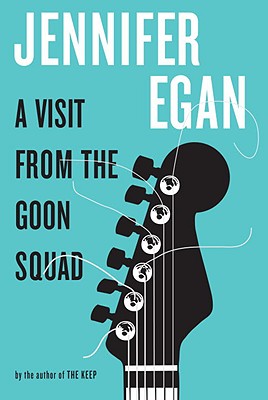
Call Jennifer Egan’s A Visit From the Goon Squad a collection of interrelated short stories. Or call it a novel, if you like. The book has won several prestigious awards, so Egan might not care what you call it. She read Wednesday night at Rutgers-Camden from the book’s opening story, or chapter, called “Found Objects,” about a New York City woman named Sasha who has a one-night stand with a man named Alex. Sasha finds time to indulge her ruling compulsion, kleptomania, when Alex uses her bathroom, and this is where Egan conjures up the sort of little surprise that makes short fiction worth reading:

… She knelt on the floor and slipped his wallet from his pants pocket and opened it, her heart firing with a sudden pressure. It was a plain black wallet, worn to gray along the edges. Rapidly she flicked among its contents: a debit card, a work ID, a gym card. In a side pocket, a faded picture of two boys and a girl in braces, squinting on a beach. A sports team in yellow uniforms, heads so small she couldn’t tell if one of them belonged to Alex. From among these dog-eared photos, a scrap of binder paper dropped into Sasha’s lap. It looked very old, the edges torn, the pale-blue lines rubbed almost away. Sasha unfolded it and saw written, in blunt pencil, “I BELIEVE IN YOU.” She froze, staring at the words. They seemed to tunnel toward her from their meagre scrap, bringing a flush of embarrassment for Alex, who’d kept this disintegrating tribute in his disintegrating wallet, and then shame at herself for having looked at it. She was faintly aware of the faucet being turned on, and of the need to move quickly. Hastily, mechanically, she reassembled the wallet, keeping the slip of paper in her hand. I’m just going to hold this, she was aware of telling herself as she tucked the wallet back into Alex’s pocket. I’ll put it back later; he probably doesn’t remember it’s in there. I’ll actually be doing him a favor by getting it out of the way before someone finds it. I’ll say, Hey, I noticed this on the rug, is it yours? And he’ll say, That? I’ve never seen it before—it must be yours, Sasha. And maybe that’s true. Maybe someone gave it to me years ago, and I forgot…

Buy the book. Support the arts. Support fiction writers!

Posted in arts, fiction | Tagged , , | 1 Comment

Natural-born faux populists


Watching Barack Obama’s speech the other night, my mood swung from bemusement to grudging admiration to laugh-out-loud disbelief. I wrote a post yesterday that focused on the president’s innate acting ability. Today, Robert Scheer noted that Obama’s gift is strongly reminiscent of Bill Clinton’s:

I’ll admit it: Listening to Barack Obama, I am ready to enlist in his campaign against the feed-the-rich Republicans … until I recall that I once responded in the same way to Bill Clinton’s faux populism. And then I get angry because betrayal by the “good guys” for whom I have ended up voting has become the norm.

Yes, betrayal, because if Obama meant what he said in Tuesday’s State of the Union address about holding the financial industry responsible for its scams, why did he appoint the old Clinton crowd that had legalized those scams to the top economic posts in his administration? Why did he hire Timothy Geithner, who has turned the Treasury Department into a concierge service for Wall Street tycoons?

Why hasn’t he pushed for a restoration of the Glass-Steagall Act, which Clinton’s deregulation reversed? Does the president really believe that the Dodd-Frank slap-on-the-wrist sellout represents “new rules to hold Wall Street accountable, so a crisis like this never happens again”? Can he name one single too-big-to-fail banking monstrosity that has been reduced in size on his watch instead of encouraged to grow ever larger by Treasury and Fed bailouts and interest-free money..?

Footnote: Thank God that Mitt “Carried Interest” Romney is such a bad actor. Imagine if he were able to fake concern for people who work for a living.

Posted in Goldman Sachs, Great Recession, humor, mainstream media, movies, Obama | Tagged , , , , | 1 Comment

Barack Obama, prince of players


Listening to Barack Obama’s State of the Union address in 2012 was like listening to his campaign speeches in 2008. Every issue he’d placed in deep freeze during his first three years as president was brought out to thaw. His newly acquired disdain for companies that move jobs overseas and financial institutions that engage in crooked business practices was unambiguously voiced. His empathy with the working class was on full display, and expressed with such earnest vigor that it seemed I must have been an idiot to conclude he was on the side of the one percent.

At one point, emphasizing the importance of closing the gap between the haves and have-nots, Obama said, “You can call this class warfare all you want. Most Americans would call that common sense.”

So succinct. So impassioned. So bogus.

Read the speech and tell me if most of the the text, minus Obama’s brilliant delivery of it, amounts to anything more than variations on promises he made four years ago that remain unfulfilled, partly because he thought it wouldn’t be prudent to offend Wall Street or the mythical mass of independent voters who are turned off by populist ideas and programs.

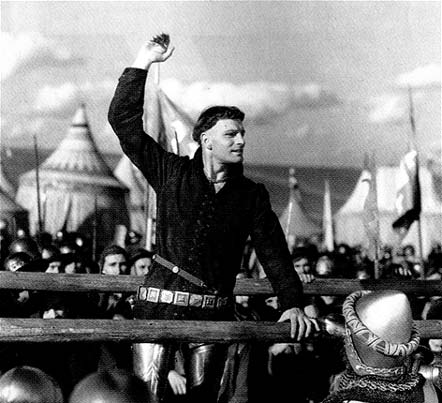
But give Obama his due. Watching him speak, I thought of the ideal leader — someone like Henry V as played by Lawrence Olivier, rousing the English troops before the battle of Agincourt. I believed Obama’s speech as he delivered it, just as I believed Olivier’s, but I knew both men were going home to bed after their performances, not into battle.

At one point in the speech, Obama did promise something that sounded substantive:

Tonight, I am asking my Attorney General to create a special unit of federal prosecutors and leading state attorneys general to expand our investigations into the abusive lending and packaging of risky mortgages that led to the housing crisis. This new unit will hold accountable those who broke the law, speed assistance to homeowners, and help turn the page on an era of recklessness that hurt so many Americans.

Obama announced that the unit will be co-chaired by New York Attorney General Eric Schneiderman, one of the few high-level prosecutors whose actions have demonstrated a commitment to bringing down the banksters. But how much power will Schneiderman actually wield?

Posted in Congress, economic collapse, globalization, Obama, Politics, Wall Street | Tagged , , , , | 3 Comments

Slave labor is good for business


A depressing piece in the Sunday New York Times re-explained why the U.S. is losing huge numbers of manufacturing jobs, but it didn’t mention how we can hope to reverse this trend if our biggest corporations continue to work with governments that stop at nothing to steal those jobs.

The writers described how the late Steve Jobs of Apple, in a tizzy over the possibility that its iPhone might not appear in stores on schedule, turned to a Chinese factory. This is how the job began to get done:

A foreman immediately roused 8,000 workers inside the company’s dormitories, according to the [Apple] executive. Each employee was given a biscuit and a cup of tea, guided to a workstation and within half an hour started a 12-hour shift fitting glass screens into beveled frames. Within 96 hours, the plant was producing over 10,000 iPhones a day.

“The speed and flexibility is breathtaking,” the executive said. “There’s no American plant that can match that.”

The writers gloss over the fact that the “speed and flexibility” of production is only possible because manufacturing centers in China receive unlimited support from the Chinese government and treat workers only slightly better than Nazis treated the slave laborers who built their V2 rockets.

No light is shed in the NYT on strategies for fighting back against totalitarian countries that subsidize production centers and mistreatment of workers. (For more on mistreatment, see “Apple and Unbridled Capitalism” in Daily Kos.)

Similarly, Robert Reich offers no solutions in an article today regarding the migration of jobs to Southeast Asia. He writes:

GE’s CEO Jeffrey Immelt chairs Obama’s council on work and competitiveness. I’d wager that as an American citizen, Immelt is concerned about working Americans. But as CEO of GE, Immelt’s job is to be concerned about GE’s shareholders. They aren’t the same.

GE has also been creating more jobs outside the United States than in it. A decade ago, fewer than half of GE’s employees were non-American; today, 54 percent are.

“Concerned”? Reich notes the need for more investment in education, R&D and infrastructure, and that the American government isn’t working on these problems, largely because of the lobbying power of the large corporations, many of which pay virtually no taxes.

Reich and the NYT ignore the hypocrisy of corporate chiefs and their stooges in Congress. These people don’t like “big government” in America because they don’t want to pay taxes, abide by environmental and safety regulations, or treat workers decently, but they love gigantic, oppressive government in China, because that’s where their profit margins are highest.

Will Barack Obama address the problem of lost jobs caused by greedy corporations in a genuinely substantive way in his State of the Union address tonight? I hope you don’t think that’s a serious question.

Posted in economic collapse, environmentalism, globalization, mainstream media, New York Times, Obama, unemployment, world-wide economy | Tagged , , | 1 Comment

A masterpiece, exclusively for you


The office of my new literary agent

I like Betsy Lerner’s blog, about the craft and business of writing. Here’s her response to someone who asked how long a writer should wait for a response from an agent to whom the writer has offered an “exclusive submission”:

You are assuming that the agent cares that you made an exclusive submission. If the agent asked you for an exclusive or makes exclusivity a condition of submission then he or she should get back to you in a timely fashion. What is a timely fashion? This is up for debate. I would say 3-6 weeks for a full length manuscript. But if there is no relationship between you and the agent, then there is no need to make the submission exclusive, or to think that by making it exclusive the manuscript will be attended to more quickly. This should be filed under magical thinking…

Right. This is one of the dangers of trying to make money as a writer — especially as a writer of novels. You create your little world, invent crises and dilemmas that demand the intervention of a higher power, which happens to be you.

The more time you spend in this self-created world, the more likely you are not only to fumble relationships with intimates, but also to make bad assumptions about how agents and publishers and the reading public will react to your work. This isn’t true for all writers, of course, but it is for many.

Offering an exclusive to an agent you don’t know indicates lack of perspective, perhaps caused by too much solitude. An agent evaluates your work on the basis of whether or not she thinks she can sell it. You have gone around the bend if you offer an exclusive and imagine the agent will react by sweating over whether your manuscript will become a bestseller if he/she rejects it.

Do some research. Query agents who seem to handle the genre of fiction in which you write. Life, is short, so query more than a few agents at a time.

One of these days I’m going to take my own advice.

Posted in arts, fiction, humor | Tagged , , | 1 Comment

Waiting can be bad for your health


My bathtub when I look at it without my glasses. Photo by TONY WOOD

With apologies to Jagger/Richards, today’s deep thought: It’s OK to wait for something you want, but not for something you need — health care, for example. Sometimes there are no jobs, and money you were counting on simply doesn’t come through, and neither does decent health insurance.

Then you have two choices: Avoid doctors as part of your effort to save money, or spend your savings on health care and hope that novel of yours becomes a hit before you go broke.

Sooner or later, your body makes up your mind for you. One morning last month, I woke up feeling like someone had driven a nail through my jaw. Waiting was no longer an option. I made dental appointments I couldn’t afford. At the first, the dentist, a good fellow, stopped drilling and asked me if there was any pain. “Only in my bank account,” I said.

It began to rain that day as I was biking home, a problem because the raindrops on my eyeglasses made it hard to see. I stopped to clean the glasses and realized, not for the first time, that I need to replace them — not because they’re steel-rimmed and severe and make me look like a defrocked priest — but rather because I need a new prescription. Even when my glasses aren’t rain-spattered, I can’t see through them as well as I did two years ago, and when I take them off, I see double.

My point again — and this is a breakthrough for someone in denial — is that unmet needs turn into big pains, or worse. You can move up or down, but you can’t stand still, not for long.

The risk is that, in shoving off, you’ll plummet to the bottom. As Barbara Ehrenreich noted in December, “… Where other once-wealthy nations have a safety net, America offers a greased chute, leading down to destitution with alarming speed.”

Actually, it leads to a big gray office staffed by overworked bureaucrats at the mercy of corporate-sponsored politicians such as PA. Gov. Tom Corbett, whose accomplishments include helping eliminate health insurance for low-income workers and, more recently, stripping 88,000 PA children of Medicaid benefits.

Eventually, we’ll have to change the corrupt campaign financing system that gets Corbett and others like him elected. But first — and here’s that deep thought again — we have to take care of our health, by any means necessary.

Footnote: Tony Wood can be reached at http://www.anthonywoodphotography.com

Posted in campaign finance reform, Congress, economic collapse, Great Recession, Politics, unemployment | Tagged , , , , | 2 Comments

Brothers under the skin: Mitt and Jay-Z


Mitt Romney (center) and his homies at Bain Capital

The question on Bill Maher’s show was “Why do many people not like Mitt Romney?” Maher didn’t mention that Mittens looks soft and un-molded, like a pod creature in Invasion of the Body Snatchers that hasn’t yet assumed full human form. Or that he speaks like a phony, alternately trying to sound stern or folksy, always condescending, often punctuating his remarks with stiff smiles and mechanical chuckles.

Instead, Maher compared Romney to other famous zillionaires — Henry Ford, Steve Jobs, Walt Disney — and noted that the latter three men made tons of money because they produced something tangible that people could buy, whereas Mitt’s wealth grew only in relation to how many jobs and lives he destroyed.

And then, in trying to explain why Mittens is doing well as a presidential candidate, Maher said something interesting:

People who like Mitt Romney like him for the same reason other people like rappers who endlessly rub it in that their life is so much better than ours. They’re in the hot tub at the after party with the bling and the bitches. And yet, no matter how clear Jay-Z makes it that the hot tub is only for the coolest and most beautiful people, somehow at the end of the song that is us.

Exactly. Maher showed photos of hip-hop stars posing with wads of cash in their hands — and one of Kanye West with a pair of benjamins in his mouth — and then a photo of Mittens and his whiter-than-white homies at Bain Capital, striking similar poses with money. His point was that material wealth — more so in our time than ever — is an end in itself, an American cultural imperative far stronger than belief in God or notions of good and evil, or race and class differences.

Look at those photos if you want to know why bankers are allowed to get away with grand theft, or why mediocrities such as PA Gov. Tom Corbett can make it difficult for poor kids and old people to obtain food stamps. It’s partly because many Americans still believe the main goal of life is to be in the hot tub with the bling and the bitches, or some variation on that scenario, and to hell with everyone else.

It’s only when hard times persist that Americans lose their awe of the rich and contempt for the poor. There would have been no New Deal — no dramatically revised social contract — without the pervasive, ongoing poverty caused by the Great Depression. In our time, there will be no new version of the New Deal until living conditions become unbearably bad for the great mass of people who call themselves middle-class.

Posted in economic collapse, globalization, Great Depression, Great Recession, Mitt Romney, Politics, The New Depression, unemployment | Tagged , , , , , , , , , | 5 Comments

Sitting Bull at Starbucks


I’ll have the pumpkin-spiced latte, white boy.

When I can no longer conjure up a good thought, let alone write a good sentence, I turn on the TV. Last night PBS showed a documentary about Lt. Colonel George Armstrong Custer, who was wiped out with more than two hundred cavalry troops he led against the Lakota Sioux in 1876. The U.S. government was in the process of stealing the Black Hills area of South Dakota from the Indians, but Custer got too cocky and picked a fight in the wrong place, separated from other units of his 700-man battalion.

The most interesting part of the story wasn’t Custer, a glory hound and all-around jerk, but rather Sitting Bull, the Lakota chief and spiritual leader who had urged Indians for years to resist domination by the whites.

At some point in the show, the narrator quoted Sitting Bull, who had continued to live off the land with other warriors after many in his tribe had become resigned to life on the reservations:

Look at me, see if I am poor, or my people either. The whites may get me at last, as you say, but I will have good times till then. You are fools to make yourselves slaves to a piece of fat bacon, some hard-tack, and a little sugar and coffee.


I remembered Eliot’s dismal Prufrock — I have measured out my life in coffee spoons — the antithesis of Sitting Bull. Then I thought don’t kid yourself, Odd Man Out, you couldn’t get through one day without your sugared coffee, not without a great struggle. You are Prufrock.

I tried to imagine Sitting Bull’s daily trek to the Starbucks in Sioux Falls. “Give me the pumpkin-spiced latte, white boy, but go easy on the whipped cream, gotta watch my cholesterol.”

I’m not saying our version of civilization is bad and we should roam the Plains — only that it’s a shame we build the cages we’re in, most of us, often without realizing it. Most people wouldn’t think of stepping out of their cages, of joining something like Occupy Wall Street. It’s too far outside the routine.

In fact, only one person in a hundred in this country really knows what freedom is. I know this because I heard it on NPR yesterday, from the Gallop Poll guy, as I was sipping my midday espresso. Or that’s what I thought I heard. One person in a hundred, but with a four percent margin of error, of course.

Posted in history, humor | Tagged , , , , , , | 4 Comments