The DOJ’s jihad on medical marijuana


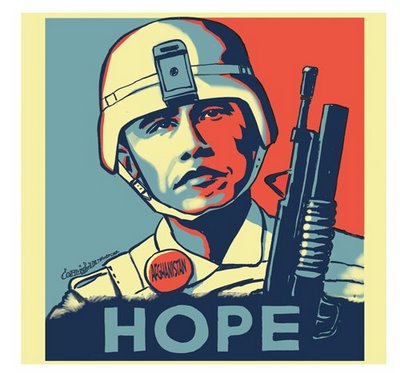
The world’s most ridiculously named law enforcement organization — the Bureau of Alcohol Tobacco and Firearms — is one of many federal agencies participating in the crackdown on medical marijuana dispensaries and growers, something that many Barack Obama supporters couldn’t have imagined happening when they elected him. From Time:

…In 2011, the Department of Justice revised its guidance to U.S. Attorneys, allowing them to target any medical marijuana activity except for ill patients and their immediate caregivers. The Drug Enforcement Administration has made it clear that “medical marijuana is not medicine,” and even called it a “mortal danger.” The Bureau of Alcohol Tobacco and Firearms has banned the sale of guns to medical marijuana patients. The Department of Housing and Urban Development has told public housing authorities that they can’t rent to medical marijuana patients. And the Internal Revenue Service has reiterated its position that medical pot businesses cannot deduct expenses related to an illegal drug. Fearing federal intervention, many banks are now dropping medical marijuana dispensaries as customers…

…Individual sick users are safe from prosecution, but they are likely to find it harder in the coming months to get the drug. Growers and dispensers are not protected by state law from federal prosecution, especially if they become large enough to get noticed by federal investigators. And the likely result is that more of the medical marijuana industry will be pushed underground in the coming years, making it more difficult for local officials to track the business. This arguably will only increase some criminal activity, as large amounts of money and a very profitable commodity move through the system by way of small-time dealers working without sophisticated security systems…

I can’t help wondering just how nervous the law-breaking banksters who ruined our economy would be if the feds went after them with a tiny fraction of the same zeal.

Footnote: Tell me again, Obama fans — what does this guy stand for that you admire?
Posted in health care, liar | Tagged , , , | 1 Comment

Bill Clinton’s disastrous assumption


Somebody at Truthdig was pondering the gulf between rich and poor in America and, not coincidentally, thought of the 1996 State of the Union address, in which Bill Clinton “kneecapped Franklin Delano Roosevelt” by declaring that the era of big government was over:

The full line, which is awfully haunting 16 years later with record poverty and the safety net in tatters, is “The era of big government is over, but we cannot go back to the time when our citizens were left to fend for themselves.”

Later that year, on Aug. 22, Clinton would sign the Personal Responsibility and Work Opportunity Act, which sounds like it was titled by George Orwell and ended the way welfare had been distributed to the poor, mostly women and children, since the 1930s.

“Welfare reform” was a plank of Newt Gingrich’s true believers in Congress. Clinton’s acquiescence and the line about big government, replayed below, were, a skeptic might say, an election year maneuver to show that the president could be tough on poor people. It worked in the sense that it helped Clinton win re-election. It failed in the sense that the welfare system is now so broken and insubstantial, some poor people don’t even bother applying.

In acquiescing to the wishes of the Gingrich gang, Clinton was indeed consigning America back to a time when citizens in need were left to fend for themselves. You can’t really have it both ways, can you?

Posted in economic collapse, history, The New Depression, unemployment | Tagged , , , | 2 Comments

Why we’re still in Afghanistan


Misleading headline. I’ve no idea why the American military presence in Afghanistan is, in fact, three times as large as it was before Barack Obama took office. Does Obama know? If he does, he’s keeping it to himself. He’s saying things like this, from the speech he gave during his surprise visit to Bagram Air Base:

…Yet here, in the predawn darkness of Afghanistan, we can see the light of a new day on the horizon…

He makes Afghanistan sound like “mission accomplished,” then allows that the military will be there through 2014, and maybe much longer, at who knows what cost. He doesn’t say why. How does such a gifted, well-educated man bring himself to use such banal and deceitful language?

I just finished reading the Vanity Fair piece about Obama in the 1980s, living in New York City and attending Columbia, doing a lot of reading and thinking. This is from a letter to a girlfriend in which he expresses admiration for poet T.S. Eliot’s world view:

…Remember how I said there’s a certain kind of conservatism which I respect more than bourgeois liberalism—Eliot is of this type. Of course, the dichotomy he maintains is reactionary, but it’s due to a deep fatalism, not ignorance. (Counter him with Yeats or Pound, who, arising from the same milieu, opted to support Hitler and Mussolini…)

I know, don’t make too much of the self-infatuated ramblings of a bright guy in his early 20s, but those lines arguably shed light on why Obama turned out to be a major disappointment to progressives who expected him to put a lid on exorbitant “defense” spending, curtail growing economic inequality, crack down on banksters, and so on.

Obama is attractive and socially adroit but he’s essentially a private man who learned early on to rein in his passions and hide his conservative beliefs regarding how to change the world for the good. He learned to veil his beliefs in abstract language that would appeal to progressive voters on an emotional level.

The irony is that, in pursuing power, he may have fooled himself as much as he fooled the rest of us. What is the good of his cautious, ostensibly middle-of-the road approach to governance? How different are his speeches — his beliefs — about the conduct of foreign wars from those of the much less gifted George W. Bush?

Posted in history, mainstream media, Obama | Tagged , , , , | 1 Comment

Dad, can I borrow $100K for college?


This is premature, but Mitt Romney seems more and more like a gift from the gods to the Barack Obama re-election campaign. The quarter-billion-dollar man is tone deaf but he keeps braying, and each of his pronouncements seem more out of tune with the national mood than the last. From Paul Krugman:

Let’s start with some advice Mitt Romney gave to college students during an appearance last week. After denouncing President Obama’s “divisiveness,” the candidate told his audience, “Take a shot, go for it, take a risk, get the education, borrow money if you have to from your parents, start a business.”

The first thing you notice here is, of course, the Romney touch — the distinctive lack of empathy for those who weren’t born into affluent families, who can’t rely on the Bank of Mom and Dad to finance their ambitions. But the rest of the remark is just as bad in its own way.

I mean, “get the education”? And pay for it how? Tuition at public colleges and universities has soared, in part thanks to sharp reductions in state aid. Mr. Romney isn’t proposing anything that would fix that; he is, however, a strong supporter of the Ryan budget plan, which would drastically cut federal student aid, causing roughly a million students to lose their Pell grants…

A gift from the gods, or an android sent by extraterrestrials to sabotage the GOP’s efforts to create environmental disaster. Or just a tremendous lucky break for the hapless, undeserving Democrats.

Posted in Great Recession, humor, Mitt Romney, The New Depression | Tagged , , | 10 Comments

Two-party system = no change


Our homes were gambling chips, not castles. And most of us weren’t even in the game.

I still can’t tell if most “middle-class” Americans understand what hit them, and why, when the economy tanked in 2008. Robert Scheer takes a crack at explaining the catastrophe with what seems the perfect metaphor. But then again, I used to work in Atlantic City:

The securitization of mortgages into collateralized debt obligations turned homes—the castles of so many average Americans—into gambling chips, and the fallout mainly hurt those who were not even in on the game. As The Wall Street Journal reported in February when [Mitt] Romney was campaigning in Nevada, the primary victims of foreclosure are those who had paid down their home loans, or worse yet owned homes outright, only to find that repossessions on their block destroyed the value of their investment.

The appalling thing is that this enormous mess did not have to happen. It is a man-made disaster, the result of capricious Wall Street bankers who have no regard for the national interest. Perhaps that is to be expected, but what is shocking is the inability of leading politicians of either party to mount a challenge to the unfettered greed that has come to dominate our political process.

In the end, the perpetrators of this calamity have been rewarded, and their patsies, the ordinary folks who are supposed to matter in a democracy, have been cast overboard.

Good so far as it goes, but Scheer is pulling his punches. He notes that executives at the big banks are “capricious,” then professes to be shocked at the “inability” of politicians to “mount a challenge” to “unfettered greed.” As if the current crop of nationally known politicians in both major parties is any better than the banksters. If they were, they wouldn’t have allowed the banksters to turn the economy into a crap shoot.

Scheer, or his headline writer, also made a curiously optimistic assumption — that we’re “halfway through the lost decade.” What makes him think things will be any better five years from now if the banksters and corporations still run this country? What if we’re one-twentieth of the way through the lost century?

Scheer and other pundits need to speak a different language in order to get beyond complaints and into the realm of solutions. They could start by addressing a basic reality — it is ridiculous to expect any real change for the good so long as we’re at the mercy of a political system dominated by two parties, both owned by moneyed interests.

Posted in casinos, Congress, economic collapse, Goldman Sachs, Great Recession, mainstream media, Occupy Wall Street, The New Depression | Tagged , , , , | 2 Comments

Louie Louie (Jordan & Armstrong)


When I get up each morning
There’s nothing to breathe but air

Posted in pop music | Leave a comment

Student-loan rate bill booby-trapped


Is our fearless leader really so feckless? Can’t he see the Rove propaganda machine uses the same tactic over and over — tying legislation that would benefit the poor and middle-class to legislation that would provide tax breaks and other advantages to the super-wealthy? Can’t he use more forceful language to spell this out for voters?

From The Raw Story:

President Barack Obama threatened on Friday to veto a House Republican bill that would keep government-backed student loan interest rates at their current level because of a poison-pill amendment, even though his veto would play directly into an obvious trap laid by Republican political strategist Karl Rove.

President Obama has said repeatedly that student loan rates must not go up — which they will on July 1 without Congressional action — and the Interest Rate Reduction Act would indeed accomplish those ends. However, it would do so by eliminating the Prevention and Public Health Fund, a key part of Obama’s health care reforms.

“This is a politically-motivated proposal and not the serious response that the problem facing America’s college students deserves,” the administration said Friday in a policy statement (PDF), threatening to veto the bill if it lands on Obama’s desk.

The bill passed the Republican-controlled House of Representatives on Friday afternoon by a margin of 215-195, with votes falling mostly along party lines.

That veto could be issued at hazard to the president, who’s facing a political Catch-22 thanks to a new strategy hatched by former Bush political adviser Karl Rove. Rove’s political action committee, American Crossroads, has a new ad out this week that makes a pitch for the youth vote by condemning Obama as a “cool” president who’s somehow causing students to struggle…

If the president is forced to veto the booby-trapped student loan bill, it will enable Republicans to ultimately claim that the president is doing little to help young people. Without Congressional action, however, government-backed student loan rates will double on July 1, which will make college significantly more expensive for 7.5 million American students, according to the liberal think tank Center for American Progress.

Obama should get out in front on this one, telling “folks” — he loves that word — that the GOP is offering a choice: We’ll keep student loan interest rates low or cut an important health care program. He should say, “Are you folks going to let them get away with this? Wouldn’t you rather keep the student loan interest rates low by doing away with tax subsidies for oil companies?”

The alternative is to stand around pretending his hands are tied before the final vote — which is a pretty good description of how he has conducted himself at crucial times throughout his first term.

Posted in Congress, Obama | Tagged , | Leave a comment

Paul Ryan renounces his god, Ayn Rand


Paul Ryan renouncing Ayn Rand is like Peter denying Christ, except that Anne Rand was a batty old atheist who preached a self-serving “philosophy” called objectivism.

ThinkProgress explains why the news of Ryan’s loss of faith seems so shocking at first glance:

In 2005, Rep. Paul Ryan (R-WI) heaped praise on Ayn Rand, a 20th-century libertarian novelist best known for her philosophy that centered on the idea that selfishness is “virtue.” The New Republic wrote:

“The reason I got involved in public service, by and large, if I had to credit one thinker, one person, it would be Ayn Rand,” Ryan said at a D.C. gathering four years ago honoring the author of “Atlas Shrugged” and “The Fountainhead.”

Ryan also noted in a 2003 interview with the Weekly Standard, “I give out ‘Atlas Shrugged’ as Christmas presents, and I make all my interns read it. Well… I try to make my interns read it.”

But today, Ryan is singing a far different tune. From an interview with National Review’s Bob Costa this week:

“I reject her philosophy,” Ryan says firmly. “It’s an atheist philosophy. It reduces human interactions down to mere contracts and it is antithetical to my worldview. If somebody is going to try to paste a person’s view on epistemology to me, then give me Thomas Aquinas,” who believed that man needs divine help in the pursuit of knowledge. “Don’t give me Ayn Rand,” he says.

The key word here is atheist. Ryan, author of the draconian Republican budget, might still keep a secret shrine to Rand but he knows he has to publicly renounce her in order not to offend voters who still find a way to reconcile their selfishness with belief in the Christian god.

AS for Ryan’s bizarre allusion to Aquinas — well, Ryan calls himself a Catholic. It makes sense for him to say he admires a Catholic theologian at a time when the Catholic hierarchy has been condemning his budget plan, which calls for severe cutbacks in aid to the poor. I wonder if he’s read what Aquinas said about the habit of doing good?

Footnote: Nice old interview of Rand by Mike Wallace on the ThinkProgress video, above.

Posted in Uncategorized | 2 Comments

Attention, Marxists


Posted in movies, pop music | Tagged , | Leave a comment

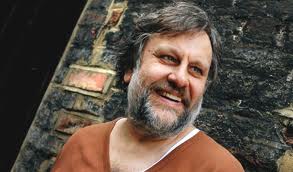
Zizek on OWS: Where to next?


Slovoj Zizek quoting from Ninotchka: 'Sorry, but we have run out of cream, we only have milk. Can I bring you coffee without milk?'

Bill O’Reilly recently denounced liberal economist Robert Reich as a communist, and Reich responded to this absurd charge by challenging O’Reilly to debate him. The debate I’d like to see, which will never take place, would be between O’Reilly and philosopher-funnyman-motormouth Slavoj Zizek, a genuine communist and an admirer of both Karl and Groucho Marx.

Here is Zizek in The Guardian, all wound up and addressing the dilemma of all who identify with the Occupy Wall Street movement:

Economic globalization is gradually but inexorably undermining the legitimacy of western democracies. Due to their international character, large economic processes cannot be controlled by democratic mechanisms which are, by definition, limited to nation states. In this way, people more and more experience institutional democratic forms as unable to capture their vital interests.

It is here that [Karl] Marx’s key insight remains valid, today perhaps more than ever: for Marx, the question of freedom should not be located primarily into the political sphere proper. The key to actual freedom rather resides in the “apolitical” network of social relations, from the market to the family, where the change needed if we want an actual improvement is not a political reform, but a change in the “apolitical” social relations of production. We do not vote about who owns what, about relations in a factory, etc – all this is left to processes outside the sphere of the political…

One of Zizek’s points is that many fed-up people are in denial about the link between their declining standards of living and the failure of capitalism in its current form. He’ll go anywhere to make his points, including classic movies:

Let us recall the famous joke from Ernst Lubitch’s Ninotchka: the hero visits a cafeteria and orders coffee without cream; the waiter replies:

“Sorry, but we have run out of cream, we only have milk. Can I bring you coffee without milk?”

Was not a similar trick at work in the dissolution of the eastern european Communist regimes in 1990? The people who protested wanted freedom and democracy without corruption and exploitation, and what they got was freedom and democracy without solidarity and justice. Likewise, the Catholic theologian close to the pope is carefully emphasizing that the protesters should target moral injustice, greed, consumerism etc, without capitalism. The self-propelling circulation of Capital remains more than ever the ultimate Real of our lives, a beast that by definition cannot be controlled.

Posted in economic collapse, globalization, Great Recession, history, humor, movies, Occupy Wall Street, unemployment, world-wide economy | Tagged , , , , , | 2 Comments